Annie Kenney
Annie Kenney was born in Springhead on 13 September 1879. She was the fifth child of Horatio Nelson Kenney and Anne Wood, who went on to have 12 children.
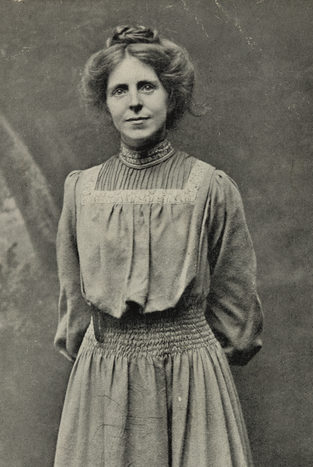
At the age of five, she moved to Shelderslow, then regarded as “the next village over”, where she attended the local village school. Census returns for 1881 list her family at Claytons (1881) and 8 Walkers Court (1891). She also lived at Whams House off Den Lane, in Hey, for a few years from the age of 17.
In the mills
At the age of 10, Annie started working half the day at a local mill. In her biography, this is referred to as “a private one under the name of Henry Atherton & Son”, now known as Woodend Mill in Springhead.
At the age of 13 she finished her studies, and went to work full time in the mill. She worked long hours, as she put it – work all day, play at night; on Saturday afternoons, play; on Sundays, Sunday School, Church, walks; and on Monday work again.
In one incident at work, she lost one of her fingers fixing a bobbin, a not uncommon injury among the children, as weaving machines were not stopped for repairs to take place.
Her life as a suffragette
Annie’s mother died in early 1905, a traumatic event in her and her family’s life. Later that year that she met Christabel Pankhurst for the first time. Annie had joined the Oldham Clarion Vocal Union, and it was here that Christabel Pankhurst and Theresa Billington came to speak on women’s suffrage, and Annie heard about Votes for Women.
Inspired by Christabel, she helped to organise a meeting for Miss Pankurst for the women of Oldham and Lees. She began to attend regular meetings with the Pankhursts in Manchester, and became involved in Trade Unionism. And so, in October 1905, she attended a rally at the Free Trade Hall in Manchester, where she interrupted future Prime Minister Winston Churchill, to shout “Will the Liberal government give votes to women?”
When they were ignored, she and Christabel unfurled a Votes for Women banner, and they became the first women to be arrested for campaigning for votes for women. She refused to pay the fine, and refused to accept Churchill’s offer to pay it for her, and was imprisoned for five days.
Following her release, Annie first lived with the Pankursts for around six months, then moved to London, where she continued her campaigning with the Women’s Social and Political Union (WSPU), who employed her from 1906.
She was arrested on thirteen occasions in total, perhaps most memorably for climbing on Prime Minister Campbell-Bannerman’s car.
Later life
During the First World War, Annie was inspirational in recruiting women to work in the factory jobs that had been left empty by men going to the front. She spent time in the United States, and in Australia, working for the WSPU with Prime Minister William Hughes. On her return she worked with David Lloyd-George to find recruits for factories
In 1918, women over the age of 30 were given the right to vote, and Annie stepped down from front line campaigning. She met and married James Taylor in 1918, and together they had a son, Warwick.
Annie’s health deteriorated, which her husband attributed to the longstanding impact of hunger strikes and force-feeding following her arrests. She died in 1953, aged 73, and her ashes are scattered on Saddleworth Moor.
Local sites
While Shelderslow was a small hamlet at the time of Annie Kenney’s birth, it remains as six houses in Springhead, off an eponymous footpath. It runs from near the junction of Den Lane and Cooper Street, winding down to the rear of Springhead Infant School.
Whams, where she lived as a teenager, is still intact, just off Den Lane in Hey.
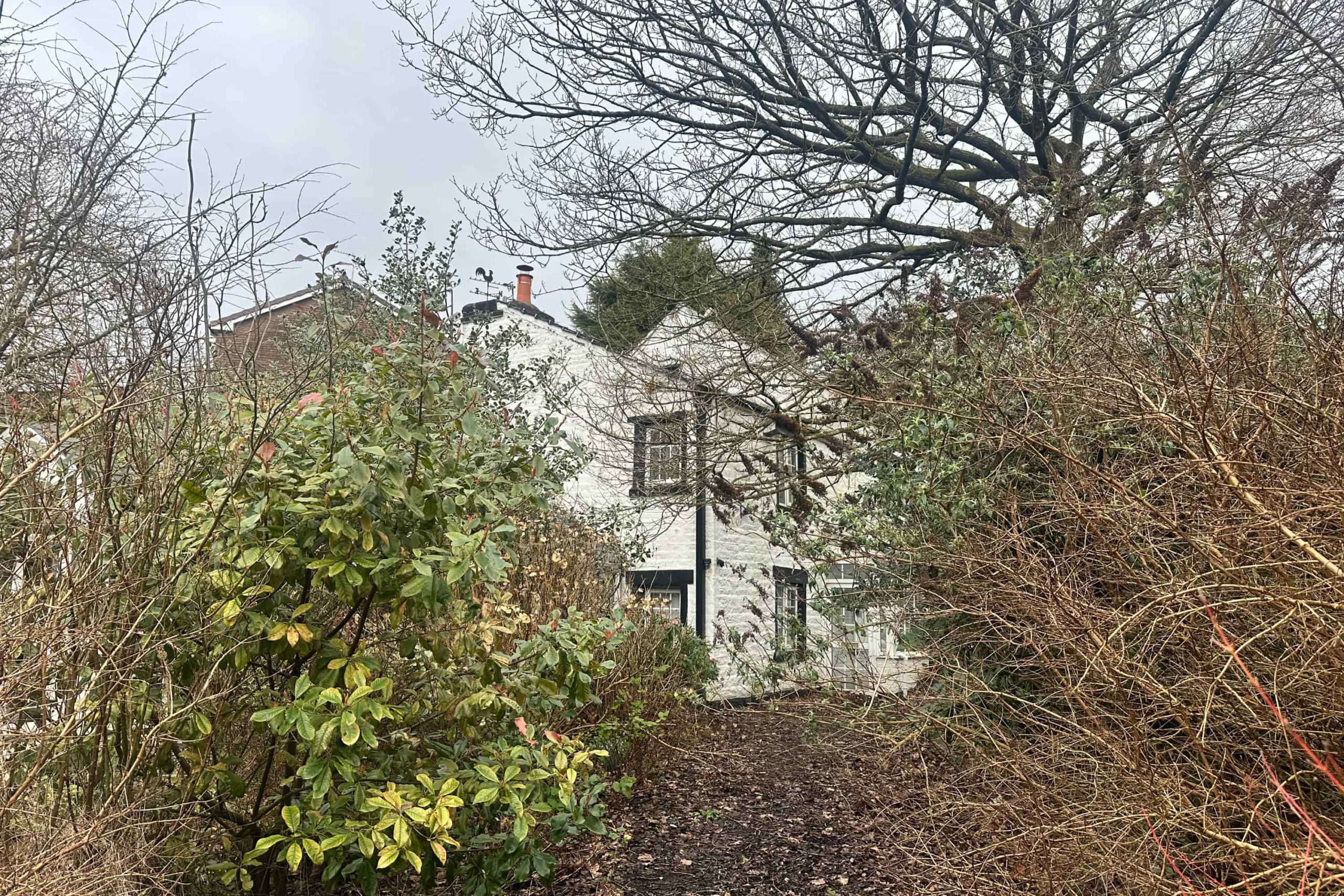
Woodend Mill is also still standing, now used as factory units. It is off Woodend Street in Springhead.
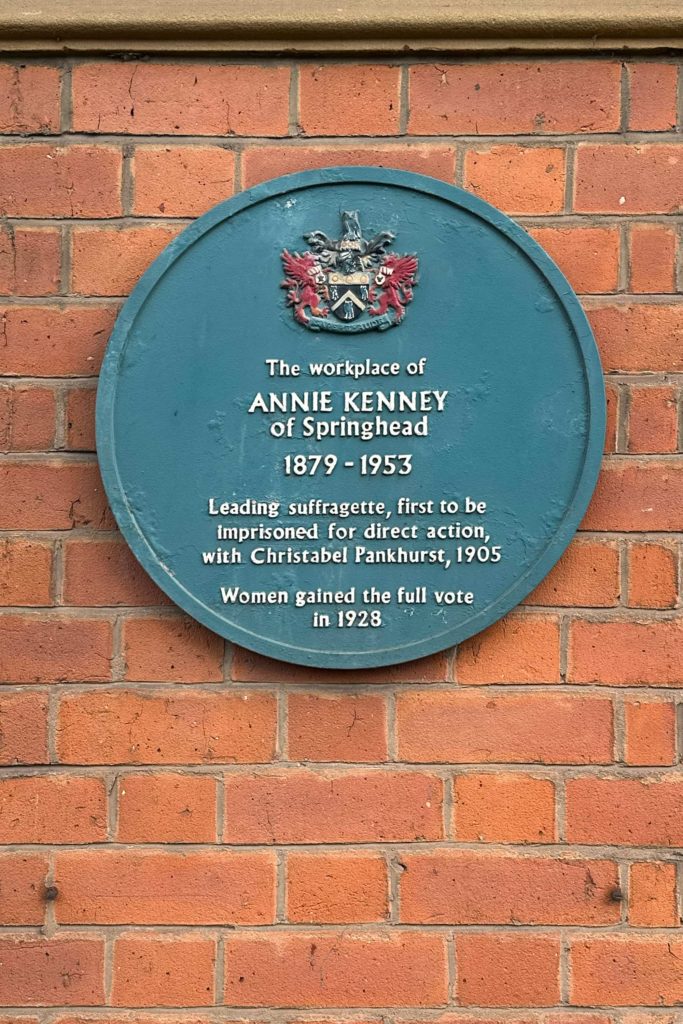
A blue plaque in memory of Annie is sited at Leesbrook Mill on Oldham Road in Lees.
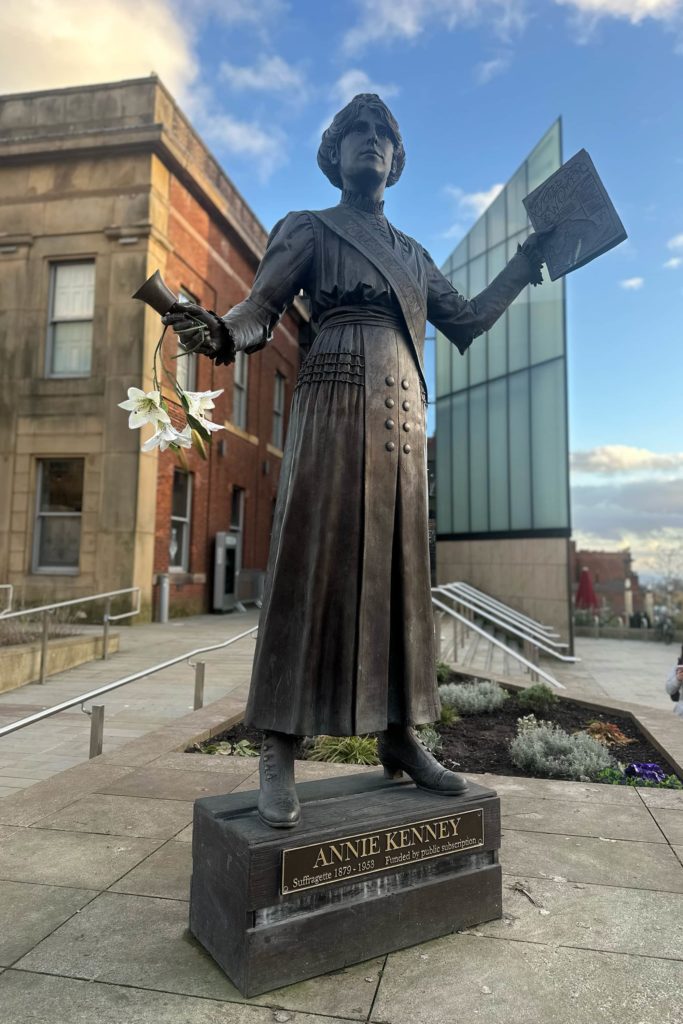
A statue of Annie Kenny is located on Parliament Square in Oldham. The sculptor was Denise Dutton and the statue was paid for by public subscription, following a campaign led by local MP Jim McMahon. It was unveiled on 14 December 2018, the anniversary of the first time that women were able to vote in a British election.
Find out more
Annie Kenney’s autobiography is available online here
Details of her campaigning are available online from the Pankhurst Museum
Annie’s son, Warwick, deposited all of her personal papers and correspondence with the archives at the University of East Anglia