Thomas Steele VC
Thomas Steele was born on 6 February 1891 at Claytons in Springhead, to parents Elizabeth and Harry Steele. His parents were originally Scottish, but had set up home in Saddleworth, and later had two other sons, Samuel and William.
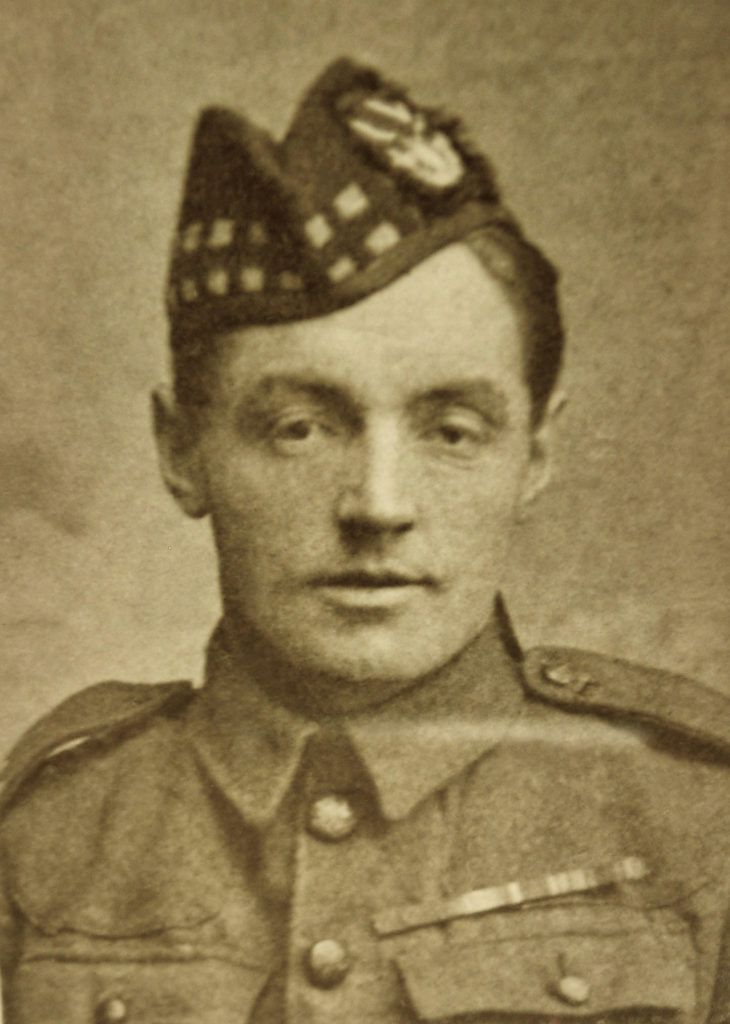
He was educated at the Austerlands Day School, on Thorpe Lane, and the Shelderslow Sunday School, off Den Lane. Aged 12, he took up part-time work in the cotton industry, and aged 16 he started full time at the Rome Mill, off Walkers Lane in Springhead. He worked as a bobbin carrier, but in mid-1911 was laid off.
He told his mother that if he could not find work quickly, he would enlist, and this was quickly, the case, signing up with the Seaforth Highlanders on 16 August, 1911.
Military career
Following training, Steele was sent to India in 1912. At the outbreak of the First World War, he was with his Battalion at Agra, and left with the 7th (Meerut) Division as a member of the Indian Expeditionary Force.
He served at Ypres, La Bassee, Neuve Chapelle and Loos. In March 1915, he was awarded a Mention in Dispatches for his part in a battle at Port Arthur, although no record remains of his actions that day. In October that year he was appointed Lance Sargeant.
He was then moved to Mesopotamia – modern day Iraq – based in Basra. His health suffered, in particular with malaria, although this did not prevent him from taking part in the thick of the fighting.
Victoria Cross
In February 1917, a plan was hatched to attack Turkish forces well entrenched on the northern banks of the Tigris, near Sanna-i-Yat. An initial attack failed to breakthrough, and five days later, on February 22, another attack was made.
The 1st Seaforths stood to at 5.30am, and the British artillery began their bombardment at 6.30am. The first two lines of Turkish trenches were seized, and although the enemy counter-attacked, they were eventually driven out. His bravery in the battle was matched by his modesty, writing to his parents that he had been “recommended for something” – that something being the highest miliary honour, the Victoria Cross.
The London Gazette on June 8, 1917, carried the details of his award, and his citation described the events.
“For most conspicuous bravery and devotion to duty. At a critical moment when a strong enemy counter-attack had temporarily regained some of the captured trenches, Sgt Steele rushed forward and assisted a comrade to carry a machine gun into position. He kept the gun in action till relieved, being mainly instrumental in keeping the remainder of the line intact.
“Some hours later another strong attack enabled the enemy to reoccupy a portion of the captured trenches. Again, Sgt Steele showed the greatest bravery, and by personal valour and example was able to rally troops who were wavering. He encouraged them to remain in their trenches and led a number of them forward, thus greatly helping to reestablish our line. On this occasion he was severely wounded – these acts of valour were performed under heavy artillery and rifle fire.”
Later life
Despite serious injuries sustained in the battle, Steele remained in action, serving with distinction in the Gulf, Egypt and Palestine until 1919.
On returning to the UK, he again took up his childhood passion of Northern Rugby Union (rugby league) to a high standard, playing three matches as a professional for Broughton, and as an amateur with Healey Street, and later Kippax RUFC.
He later moved to Leicestershire, with wife Bertha McCready, serving with the Territorial Army, and working for Central Motors, and later as a telephone clerk and with a car sales firm. He returned to Saddleworth following the death of his wife in 1977, and a year later, at the age of 87, died at home.
Local sites
While Shelderslow was a small hamlet at the time of Thomas Steele’s birth, it remains as six houses in Springhead, off an eponymous footpath. It runs from near the junction of Den Lane and Cooper Street, winding down to the rear of Springhead Infant School.
Austerlands Day School was located on Thorpe Lane, not far from the still standing Austerlands mill tower.
His place of birth is given as Claytons, Springhead. Claytons was a small area off Cooper Street, near Shelderslow. While the area no longer uses the name, Claytons Close, off the Rise in Springhead, is a small cul-de-sac of around 30 houses named after the area.
Rome Mill was off Walkers Lane in Springhead, but ceased production in 1928. It was then used for wallpaper manufacture from 1932 to 1990, but was demolished in 1992 and replaced by housing.
A copy of Thomas Steele’s citation for the Victoria Cross is on display at Springhead Community Centre on Ashes Lane.
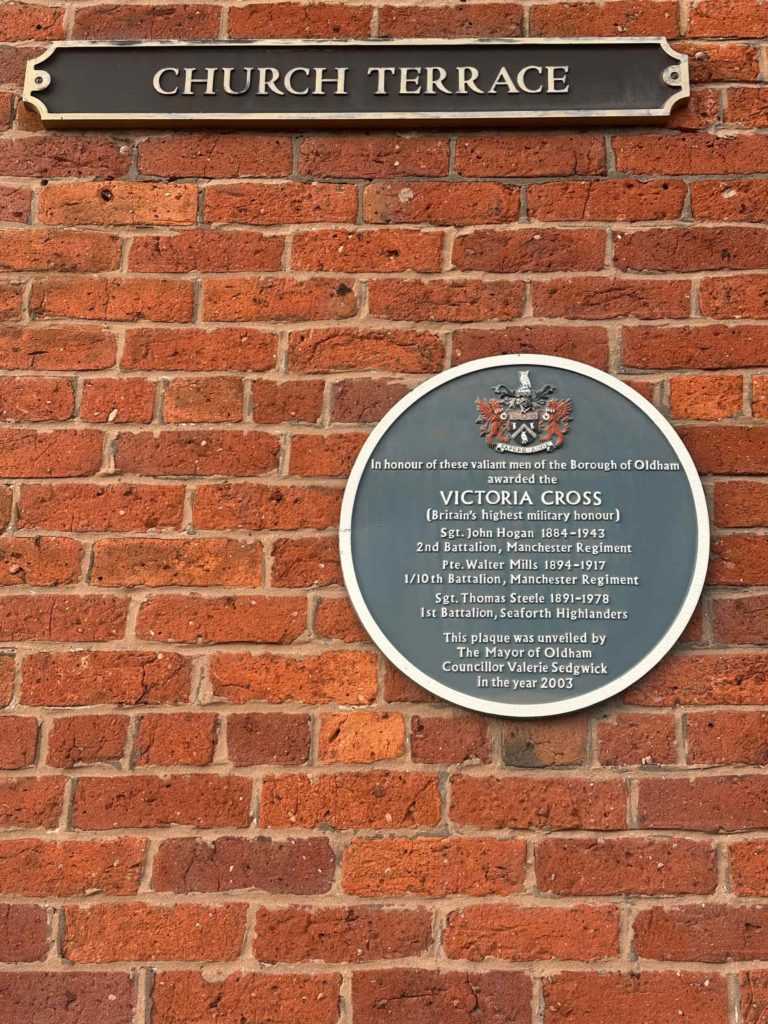
The blue plaque marking Thomas Steele as one of three Oldhamers to be awarded the Victoria Cross is located at Church Terrace, just near the Oldham Parish Church.
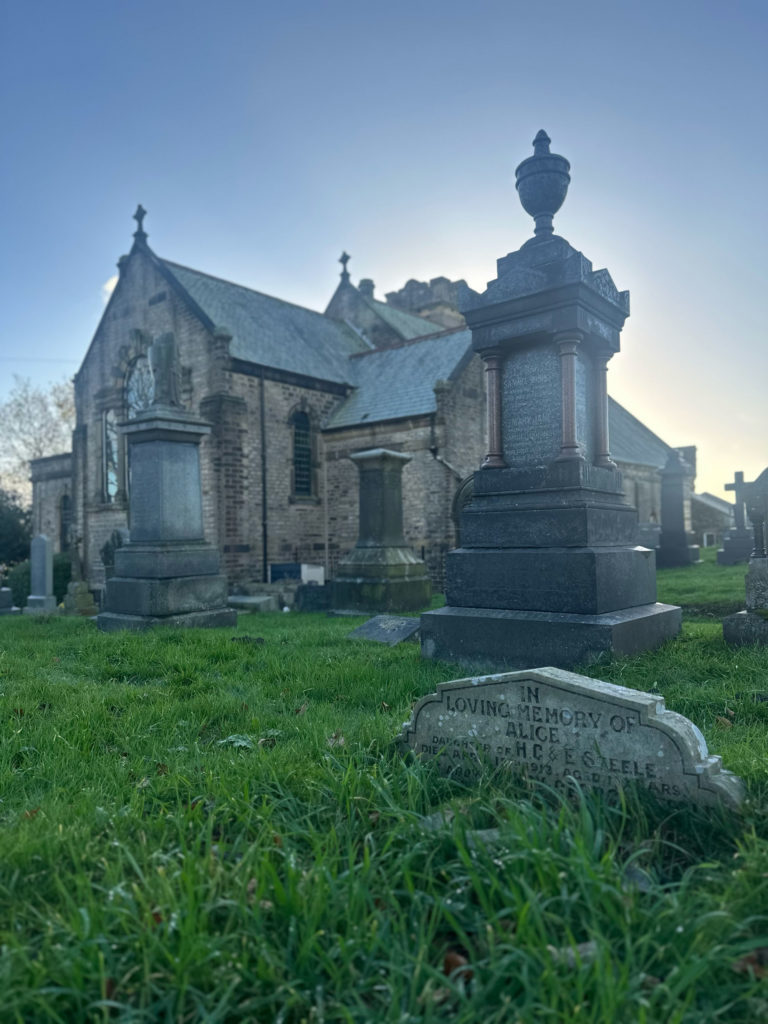
The family grave, where his ashes were interred, is at St Anne’s Church in Lydgate.
Find out more
A comprehensive history of Thomas Steele’s life is available online from the Saddleworth Historical Society. The details are here and here.
Another extensive article covering his military career is available here.